
Histoire
The East Mill
Built 1912. Listed Grade II. Part of a World Heritage Site. Home to peregrine falcons. And, from January, to us.
Why Belper loves it
The building on every horizon
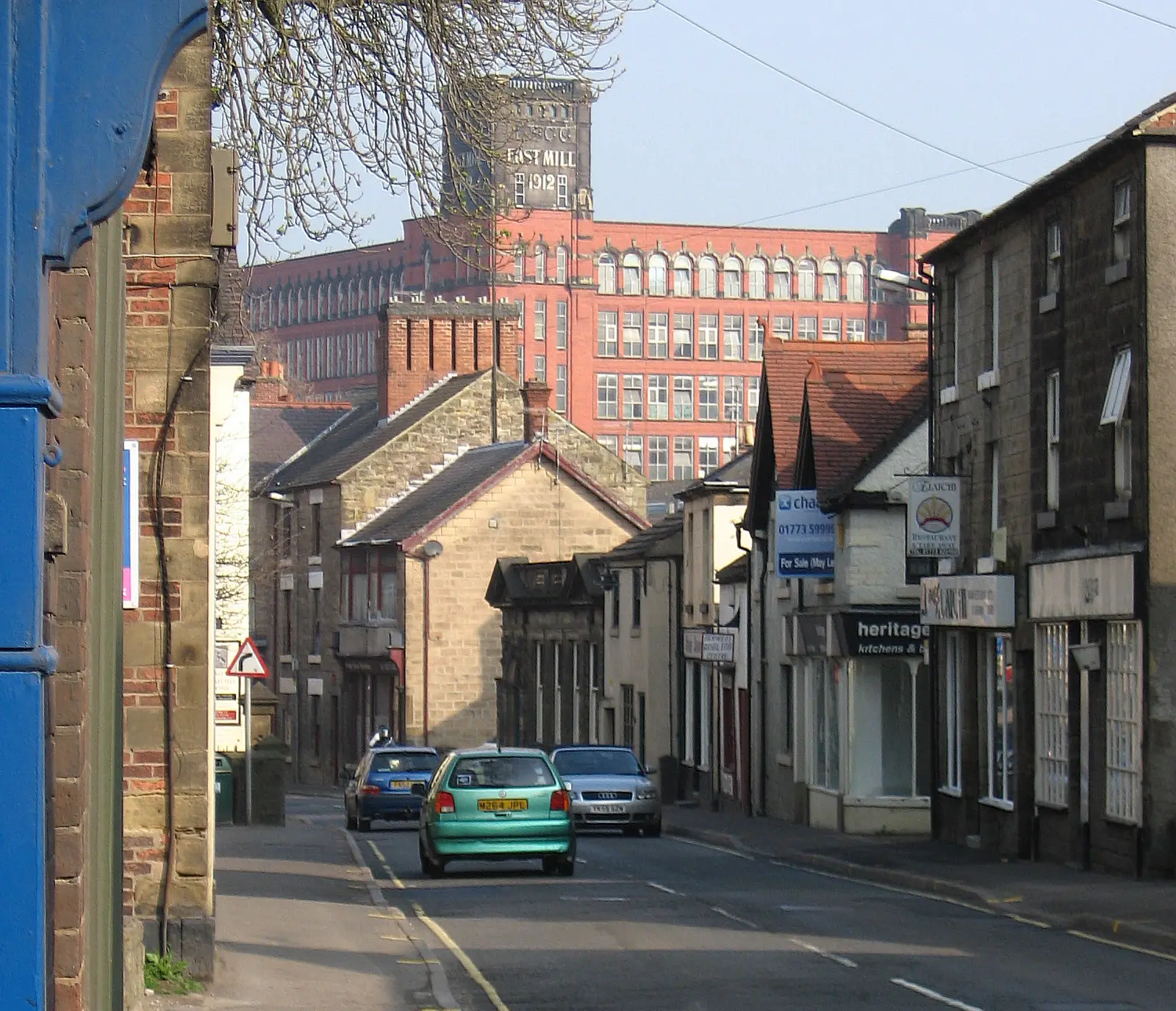
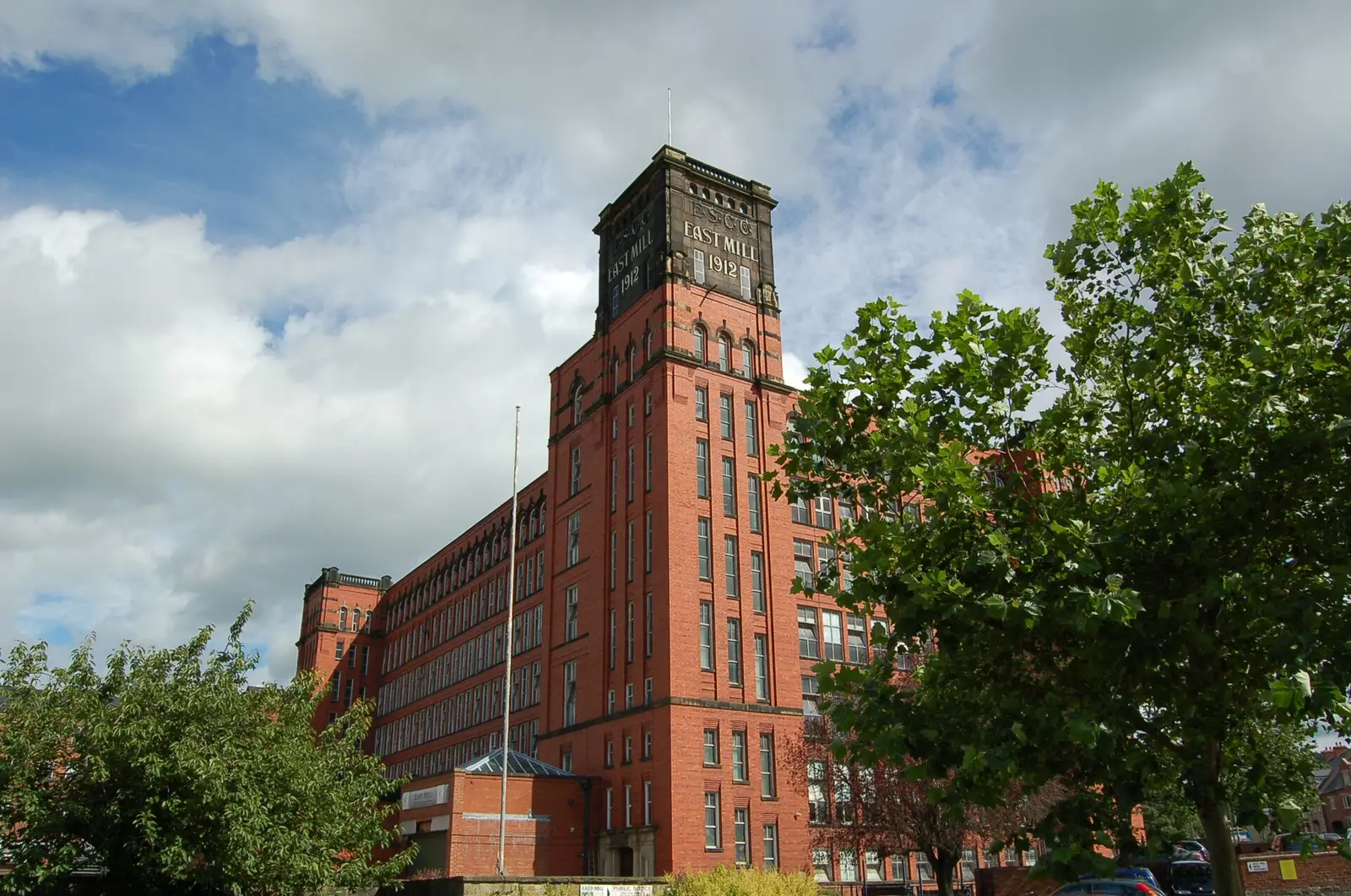
You cannot be in Belper without seeing the East Mill. Arrive by train, by the A6 or on foot along the Derwent, and it is there: a vast cliff of red brick, crowned by a dark stone water tower that announces, to anyone who looks up, ESCCo East Mill 1912.
It is the most recent of Belper’s great mills, and the largest. It stands beside the river at Bridge Foot, next to the Grade I listed North Mill and above the Horseshoe Weir, in the heart of the Derwent Valley Mills World Heritage Site: the valley where, in the late eighteenth century, the modern factory was born.
Generations of Belper families worked here. For everyone else, it is simply how you know you are home.
Chronologie
Two and a half centuries on the Derwent
-
1776
Jedediah Strutt comes to Belper
Strutt, a hosier and inventor who had partnered with Richard Arkwright at Cromford, begins building his first cotton mill beside the Derwent. Belper grows from a village of nailers into one of the great mill towns of England, with Strutt’s family building workers’ housing, schools and chapels around the mills.
-
1804
The North Mill rises from the ashes
After fire destroys the original North Mill in 1803, William Strutt rebuilds it with an iron frame and brick vaulting designed to resist fire: a pioneering structure now listed Grade I and still standing beside the East Mill today.
-
1897
The English Sewing Cotton Company
The Strutt family business passes to the newly formed English Sewing Cotton Company, which sets about modernising the Belper site.
-
1912
The East Mill is completed
Designed by Sidney Stott of Oldham, one of the great mill architects of the age, the East Mill is built for the English Sewing Cotton Company in red brick, with long ranks of windows to flood the spinning floors with light and a row of arches along its top storey. Despite what you may read, it was not built by a Strutt: the family had sold up fifteen years earlier.
-
2001
World Heritage
UNESCO inscribes the Derwent Valley Mills, from Matlock Bath to Derby, as a World Heritage Site, recognising the valley as the birthplace of the factory system. The Belper mills sit at its heart.
-
2011
The falcons move in
By this year at least, according to local observers, a pair of peregrine falcons is breeding high on the East Mill. Nearly forty young are estimated to have fledged here since. They have the best view in Derbyshire, and they are, we would note, our suppliers.
-
2027
Fal-consumé
On the first of January, the top floor of the East Mill opens its doors to diners for the first time in its history.
Hommage
A tribute to the custodians
It is fashionable, these days, to expect the public to shoulder the cost of looking after great historic buildings. The custodians of the East Mill have never subscribed to that view, and we would like to take a moment to recognise them.
Patience
The East Mill is in the care of FI Real Estate Management (FIREM) of Chorley, Lancashire, who submitted plans for the site to Amber Valley Borough Council in 2018 (planning reference AVA/2018/0819). Lesser owners might have rushed. FIREM allowed the building nearly eight years to mature before approval was granted, in the way one might age a great cheese, or leave an egg on a roof.
Restraint
In 2021, the borough council was reported to be drawing up a repairs notice to ensure, in the words of the local press, that the building “does not deteriorate even further than it already has”, and to have discussed compulsory purchase with Historic England and Derbyshire County Council. The council, it was noted, did not have the money to buy the site and carry out the repairs itself.
The leader of Derbyshire County Council has since publicly claimed that the owners have “failed” to maintain the “dilapidated” mills. We prefer to call it a light touch.
Vision
In February 2026, Amber Valley’s planning committee voted unanimously to approve the conversion of the East Mill into 130 apartments, with a condition that works to the Grade I North Mill be completed before development on the East Mill begins. The developer called the decision “a hugely significant milestone”. We agree, and we are particularly excited about the 131st unit.
Self-reliance
Above all, we wish to recognise that at no point has the burden of this extraordinary building been placed upon the public. The scheme’s viability, the developer has explained, depends only on securing investment from the East Midlands Combined County Authority’s Brownfield Housing Fund, a pot of money the Authority secured from central government, with further heritage funding needed for the wider site.
The people of Belper, in other words, will not be asked to contribute to the East Mill in any way, other than financially.
Sources & credits
Further reading
- Go-ahead for historic Belper Mills resi scheme, Place Midlands, February 2026
- Belper Mills, Derbyshire Historic Buildings Trust
- Owner of historic “dilapidated” Derbyshire mills has “failed” to maintain them, council leader claims, Belper News
- Time running out for plans to convert historic Derbyshire mills into apartments, Belper News, 2021
- Belper & the Strutts: the mills, belper-research.com
- East Mill, Belper, Derbyshire Historic Environment Record
- Disturbance at peregrine nest, Raptor Persecution UK, June 2024
Photography
- East Mill tower by Danielloh79, CC BY-SA 3.0, cropped and toned
- East Mill towers over Bridge Street by Dave Bevis, CC BY-SA 2.0, cropped and toned
- Rear of East Mill (window detail) by Dave Bevis, CC BY-SA 2.0, cropped and toned
- East Mill, Belper, Derbyshire by Eamon Curry, CC BY 2.0, cropped and toned
- Broken windows, East Mill: BBC News
- Peregrine falcon eggs by Roger Culos, CC BY-SA 4.0, cropped
- Peregrine falcon in flight, Cape Baily by Kytabu, CC BY-SA 4.0, background removed
- Peregrine Falcon 12 by Ltshears, CC BY-SA 3.0, background removed
- A peregrine falcon in flight by Hari K Patibanda, CC BY 2.0, cropped
- Peregrine clutch by Peter Wegner, CC BY-SA 3.0
- Bandstand, Belper by Alan Murray-Rust, CC BY-SA 2.0


